
Hyundai Tucson: Brake System / Brake Booster
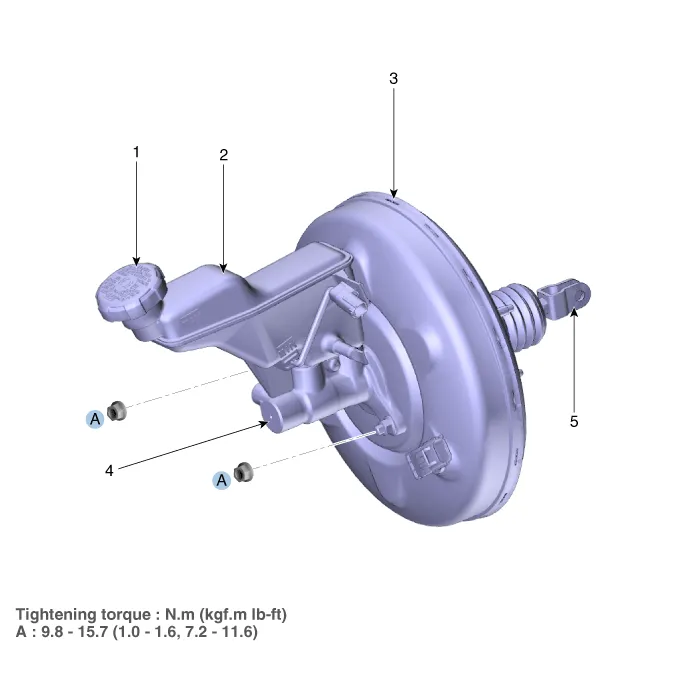
1. Reservoir cap
2. Reservoir
3. Brake booster
4. Master cylinder
5. Push rod
1.Run the engine for one or two minutes, and then stop it. If the pedal depresses fully the first time but gradually becomes higher when depressed succeeding times, the booster is operating properly, if the pedal height remains unchanged, If there is no change in pedal stroke, check valve, vacuum hose and booster need to be checked.
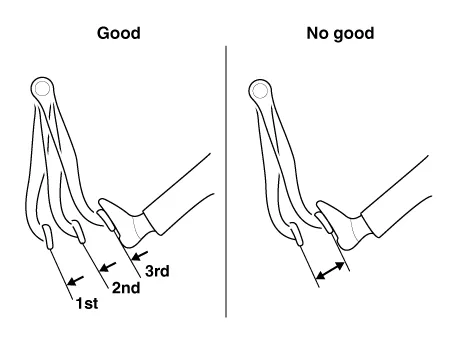
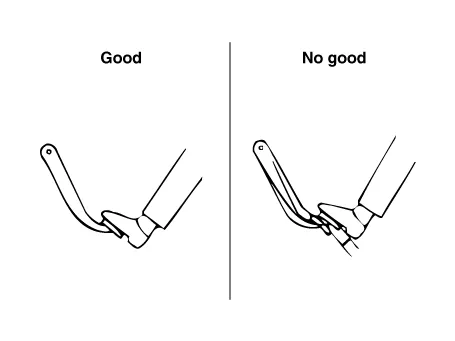
2.With the engine stopped, step on the brake pedal several times.Then step on the brake pedal and start the engine. If the pedal moves downward slightly, the booster is in good condition. If there is no change in pedal stroke, check valve, vacuum hose and booster need to be checked.
3.With the engine running, step on the brake pedal and then stop the engine.Hold the pedal depressed for 30 seconds. If the pedal height does not change, the booster is in good condition, If there is no change in pedal stroke, check valve, vacuum hose and booster need to be checked.
1.Turn ignition switch OFF and disconnect the negative (-) battery cable.
2.Remove the battery and battery tray.(Refer to Engine Electrical System - "Battery")
3.Remove the air duct and air cleaner assembly.(Refer to Engine Mechanical System - "Air Cleaner")
4.Remove the master cylinder.(Refer to Brake System - "Master Cylinder")
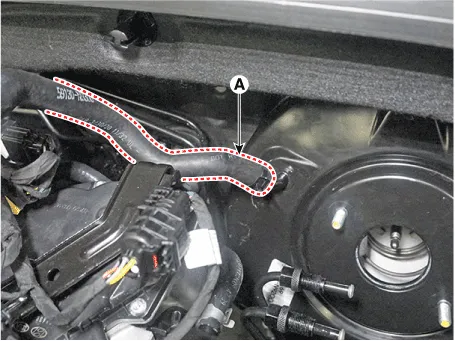
5.Remove the fixing clip and the vacuum hose (A) from the brake booster.
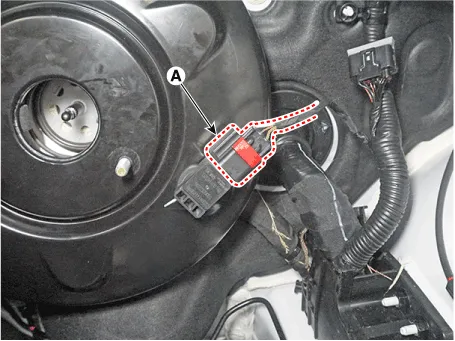
6.Disconnect the brake booster vacuum pressure sensor connector (A).
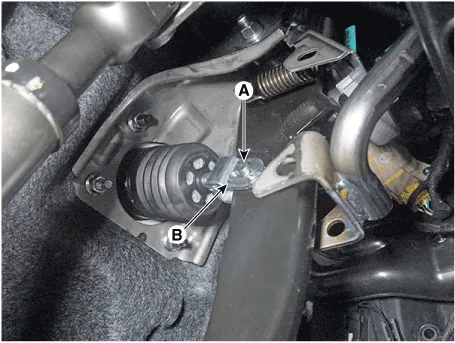
7.Remove the snap pin (B) and the clevis pin (A).
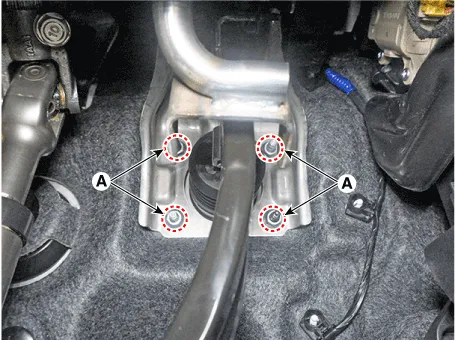
8.Remove the brake booster (B) after loosening the mounting nuts (A).
Tightening torque :16.7 - 25.5 N.m (1.7 - 2.6 kgf.m, 12.3 - 18.8 lb-ft)
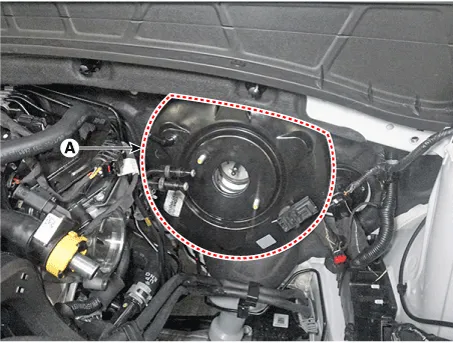
1.Inspect the vacuum hose.
2.Check the boot for damage.
1.Installation is the reverse of removal.

• Before installing the pin, apply the grease to the joint pin.
• Use a new snap pin whenever installing.
2.After installation, bleed the brake system.(Refer to Brake System - "Brake Bleeding Procedures")
3.Check the brake oil leakage and pedal operating condition.
 Repair procedures
- Inspection
Operation and Leakage Check
1.Brake Booster (A)(1)Check brake operation by applying the
brake during the test run. If the brake does not operate properly,
replace the brake boo ...
 Master Cylinder
- Components
1. Reservoir cap2. Reservoir3. Brake booster4. Master cylinder5. Push rod
- Removal
1.Turm ignition switch OFF and disconnect the negative (-) battery cable.
2.Remove the b ...
Other information:
Hyundai Tucson (NX4) 2022-2026 Service Manual: Hood
Repair procedures
- Adjustment
1.After loosening the hinge (A) mounting bolt, adjust the hood (B)
by moving it up and down or from side to side and tighten the bolt.
2.Adjust the hood height by moving the hood overslam bumpers (C) up and down.
3.After loosening the hood latch (D) mounting ...
Hyundai Tucson (NX4) 2022-2026 Service Manual: Tail Gate Garnish
- Component Location
1. Liftgate back panel
- Replacement
• Put on gloves to prevent hand injuries.
• Take care not to scratch the liftgate and body surface.
1.Remove the liftgate lower trim.(Refer to Liftgate - "Liftgate Trim")
2.Using ...
