
Hyundai Tucson: Coupling Assembly / Direct Electro Hydraulic Actuator Coupling
1.AUTO MODE:
– When driving in 4WD AUTO mode, the vehicle operates similar to conventional 2WD vehicles under normal operating conditions. However, if the system determines that there is a need for the 4WD mode, the engine’s driving power is distributedto all four wheels automatically without driver intervention.
– When driving on normal roads and pavement, the vehicle moves similar to conventional 2WD vehicles.
2.LOCK MODE:
– This mode is used for climbing or descending sharp grades, off-road driving, driving on sandy and muddy roads, etc., to maximize traction.
– However, binding may occur in LOCK MODE when circling and it does not operate when the vehicle speed is over 60 km/h.
1.Cruising (Auto Mode)
– Power is delivered mostly to the front wheels.
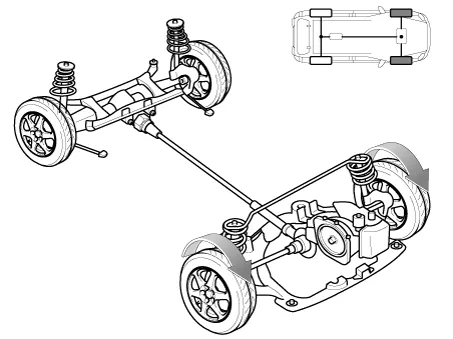
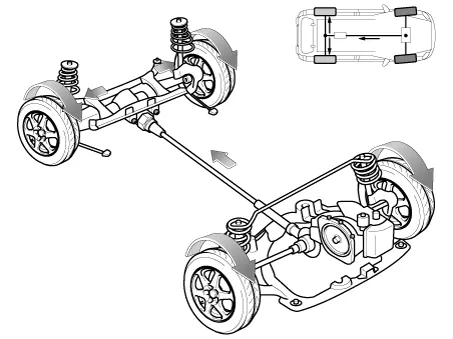
2.Cornering (Auto Mode)
– Adjusts the amount of power to the rear wheels based on the turning radius and cornering speed.
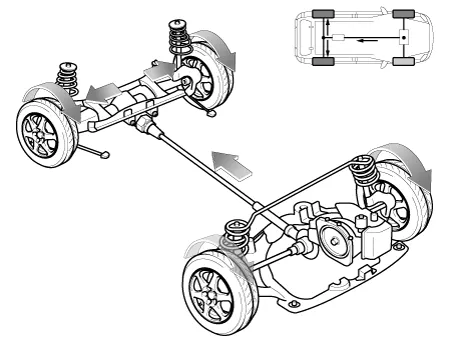
3.Wheel Slip (Auto Mode)
– If one or both of the front wheels lose traction, the system transfers an appropriate amount of power to the rear wheels based on the slip amount at the front wheels.
Electronic Coupling
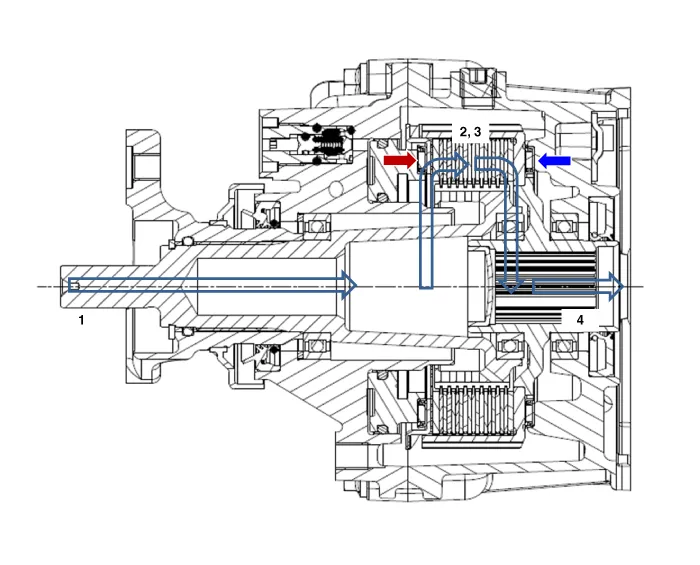
1.The power is delivered in the following order: Transmission -> Transfer -> Propeller shaft
2.AWD ECU calculates the necessary amount of rear-wheel torque and sends the corresponding driving current to the actuator (electronic motor and hydraulic pump).
3.The piston operates by the oil pressure and the friction is generated. Then, the clutch is engaged.
4.The power is delivered to the differential by the engaged clutch and the driving power is generated in to the rear wheel.

• All units are filled up with coupling fluid (ultra-low viscosity ATF) prior to shipping. Inspection, fill-up, and replacement of coupling fluid is therefore not necessary (zero maintenance, lifetime fluid).

• Refer to the handling caution level (A) when servicing the coupling (removal, installation, replacement, etc.).
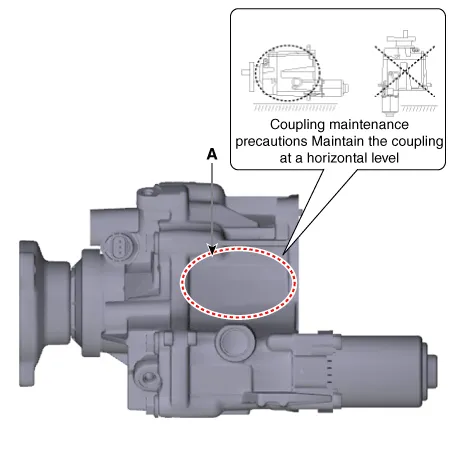
• Always maintain a horizontal posture.
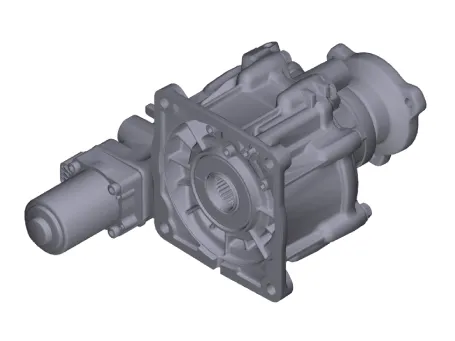

• Be careful not to damage the parts located under the vehicle (floor under cover, fuel filter, fuel tank and canister) when raising the vehicle using the lift.(Refer to General Information - "Lift and Support Points")
1.Loosen the rear propeller shaft assembly mounting bolts and then removing the rear propeller shaft assembly (A).
Tightening torque :49.0 - 68.6N.m (5.0 - 7.0kgf.m, 36.2 - 50.6lb-ft)
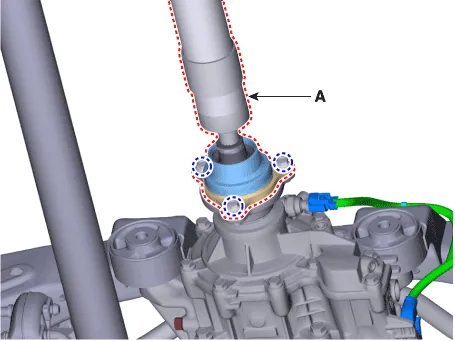
2.Using a flat tool, separate the propellar shaft from 4WD coupling assembly.
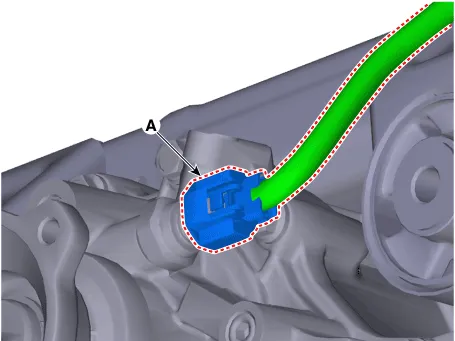
3.Disconnect the oil hydrulic motor connector (A).
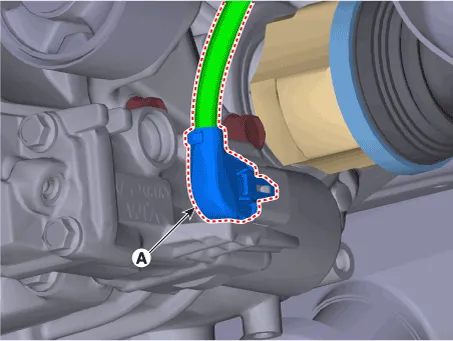
4.Disconnect the pressure sensor connector (A).
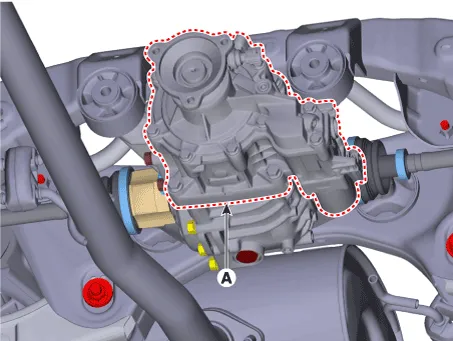
5.Loosen the bolts and then removing the coupling assembly (A).
Tightening torque :58.9 - 64.7 N.m (5.8 - 6.6kgf.m, 41.9 - 47.7 lb-ft)
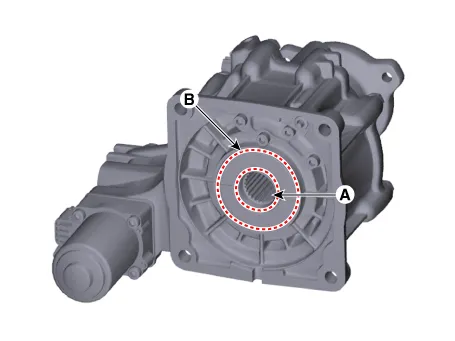
1.To install, reverse the removal procedures.

• Smear the splines (A) with molybdenum type high pressure grease.
• When install the coupling, be careful not to damage the oil seal (B).
2.After replacing the coupling, reset the 4WD ECU's clutch learing using the diagnostic tool.(Refer to 4WD Control System - "Repair procedures")
 Components and Components Location
- Component Location
1. Coupling assembly 2. Pressure sensor3. Oil hydraulic motor
...
 Oil hydraulic Motor(Actuator)
- Description
The 4WD ECM controls the Pump Motor Pump (Actuator) to generating an
oil pressure. The pressure engages a multiple disk clutch to transfer
torque to the rear wheels. The torque to ...
Other information:
Hyundai Tucson (NX4) 2022-2026 Service Manual: Troubleshooting
- Troubleshooting
Wireless Power Charger System Troubleshooting
Trouble statusInspection itemInspection
Not chargedCheck the mobile phone status R-1
Amber LED blinks OvercurrentR-2
OverheatingR-2
Foreign matterR-2
R-1. Check the wireless power charger system operation
1.If the placement ...
Hyundai Tucson (NX4) 2022-2026 Owner's Manual: Fuel Requirements
Gasoline Engine
Unleaded
Your new vehicle is designed to perform
optimally with unleaded fuel having
an octane number ((R+M)/2) of 87
(Research Octane Number 91) or higher.
Your new vehicle is designed to obtain
maximum performance with UNLEADED
FUEL, as well as minimize exhaust
emiss ...
