
Hyundai Tucson: Emission Control System / Evaporative Emission Control System
Description and Operation
Schematic Diagrams
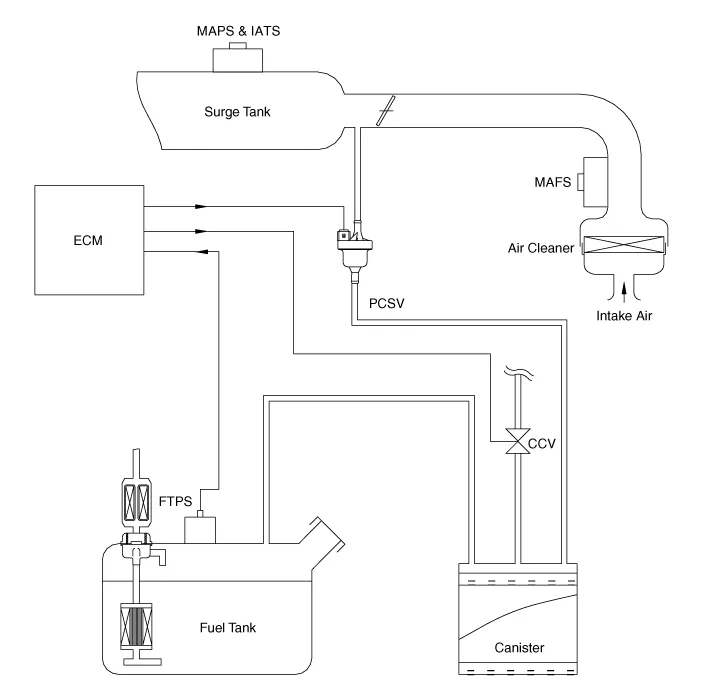
• MAPS : Manifold Absolute Pressure Sensor
• PCSV : Purge Control Solenoid Valve
• MAFS : Mass Air Flow Sensor
• FTPS : Fuel Tank Pressure Sensor
• CCV : Canister Close Valve
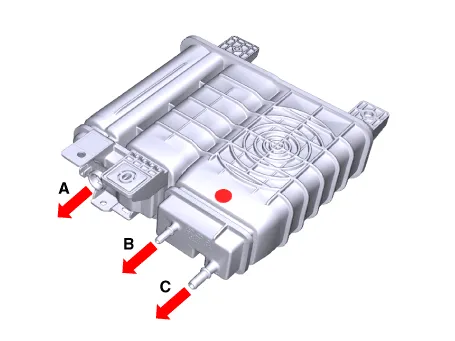
Canister

• Be careful not to damage the parts located under the vehicle (floor under cover, canister, fuel tank) when raising the vehicle using the lift.(Refer to General Information - "Lift and Support Points")
1.Turn the ignition switch OFF and disconnect the battery (-) terminal.
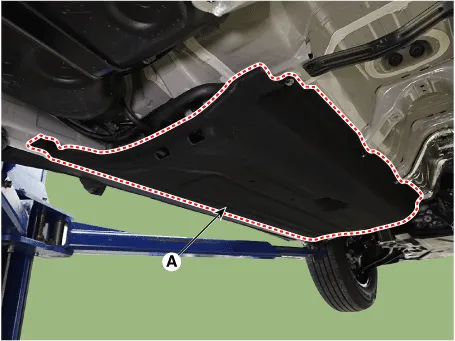
2.Remove the floor under cover (A).
Tightening Torque :7.9 - 11.8 N.m (0.8 - 1.2 kgf.m, 5.8 - 8.7 lb-ft)
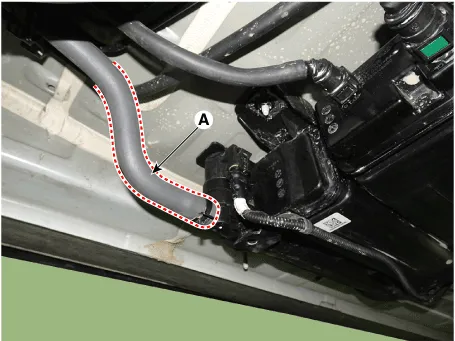
3.Separate the ventilation hose (A).
4.Disconnect the canister close valve connector (A).
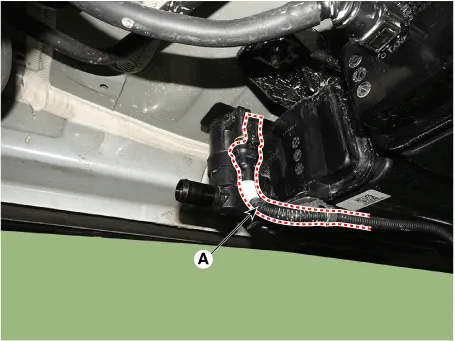
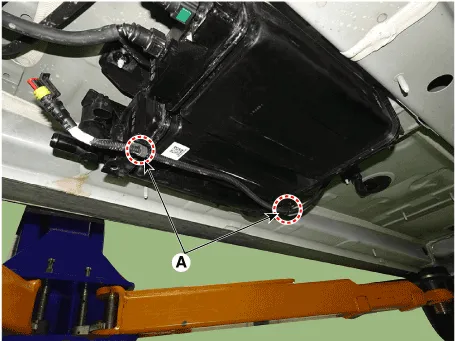
5.Remove the wiring fixing clip (A).
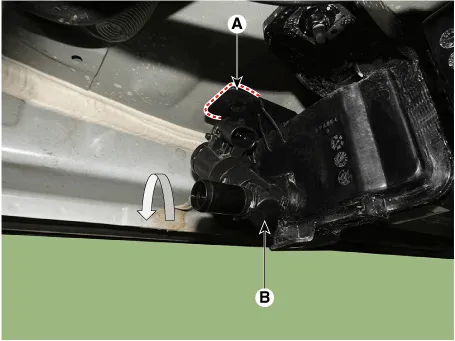
6.Lifting the fixed part (A) and then rotating CCV (B) 30 degrees in the direction of the arrow.
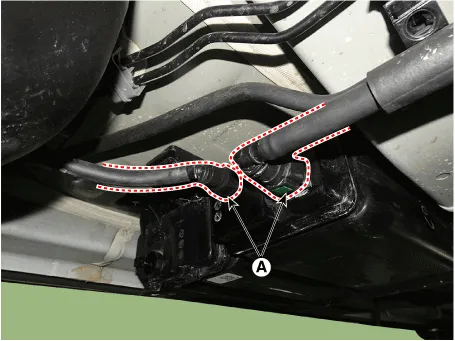
7.Disconnect the vapor hose quick-connector (A).
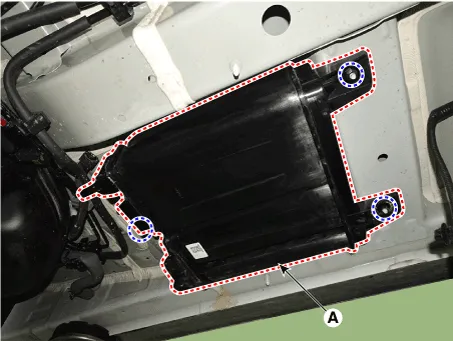
8.Remove the canister (A) after loosening the mounting nuts.
Tightening Torque :18.6 - 23.5 N.m (1.9 - 2.4 kgf.m, 13.7 - 17.4 lb-ft)
1.Install in the reverse order of removal.
1.Check for the following items visually.
– Cracks or leakage of the canister
– Loose connection, distortion, or damage of the vapor hose/tube
Fuel Tank Air Filter

• Be careful not to damage the parts located under the vehicle (floor under cover, canister, fuel tank) when raising the vehicle using the lift.(Refer to General Information - "Lift and Support Points")
1.Turn the ignition switch OFF and disconnect the battery (-) terminal.
2.Lift the vehicle.
3.Remove the rear-left wheel & tire and wheel house cover.
4.Separate the ventilation hoses (A).
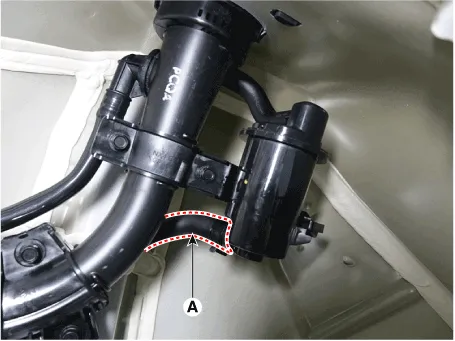
5.Remove the fuel tank air filter (B) after loosening the mounting bolts (A).
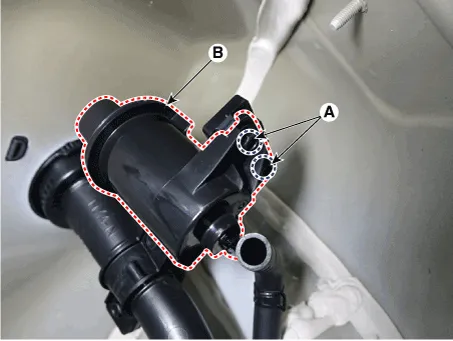
6.Remove the ventilation hose (A) from the fuel tank air filter.
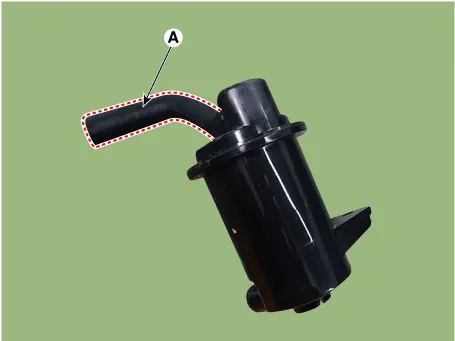
1.Install in the reverse order of removal.
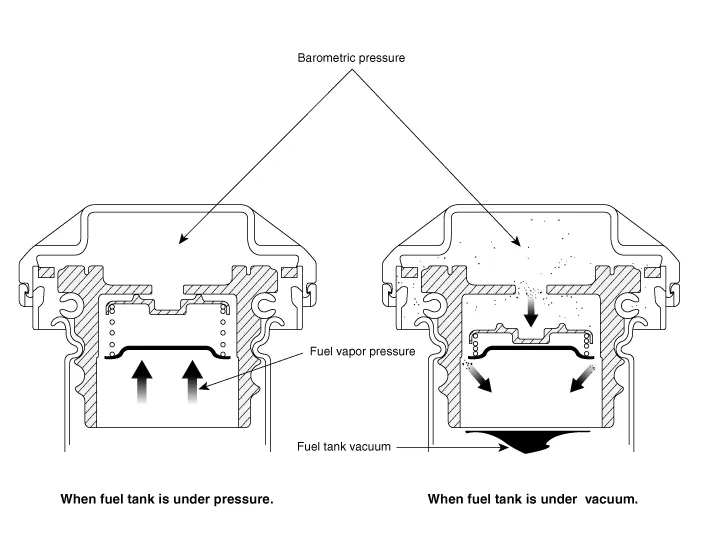
Fuel Filler Cap
Other information:
Hyundai Tucson (NX4) 2022-2026 Service Manual: Drive Belt Tensioner
- Removal and Installation
• Be careful not to damage the parts located under the vehicle
(floor under cover, fuel filter, fuel tank and canister) when raising
the vehicle using the lift.(Refer to General Information - "Lift and
Support Points")
Drive Belt Tensioner
...
Hyundai Tucson (NX4) 2022-2026 Owner's Manual: Seats
Front seat
1 Forward and rearward
2 Seatback angle
3 Seat cushion angle*
4 Seat height
5 Lumbar support (Driver’s seat)*
6 Seat warmer*
7 Air ventilation seat*
8 Head restraint
Rear seats
9 Seatback angle and folding
10 Head restraint
11 Armrest
12 Seat warmer* ...
